IMPROVED COMFORT IN DAILY OPERATION
For employees working in swimming facilities, perceived air quality is crucial. High humidity combined with insufficient air movement can be experienced as heavy and uncomfortable air – particularly during longer stays.
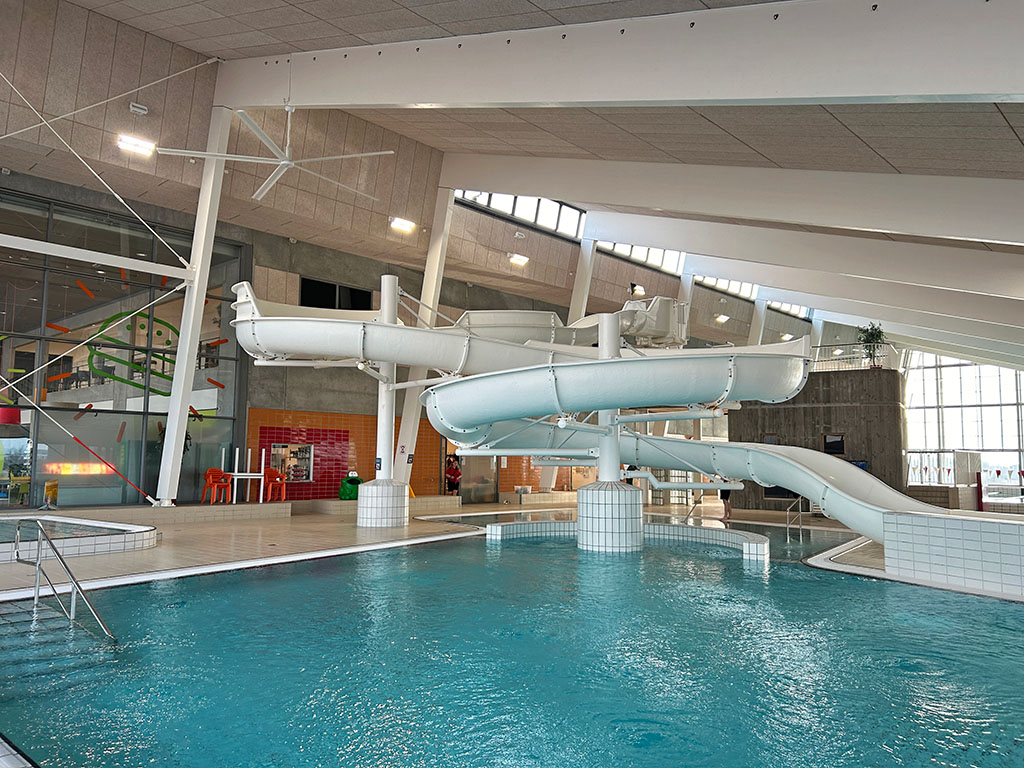
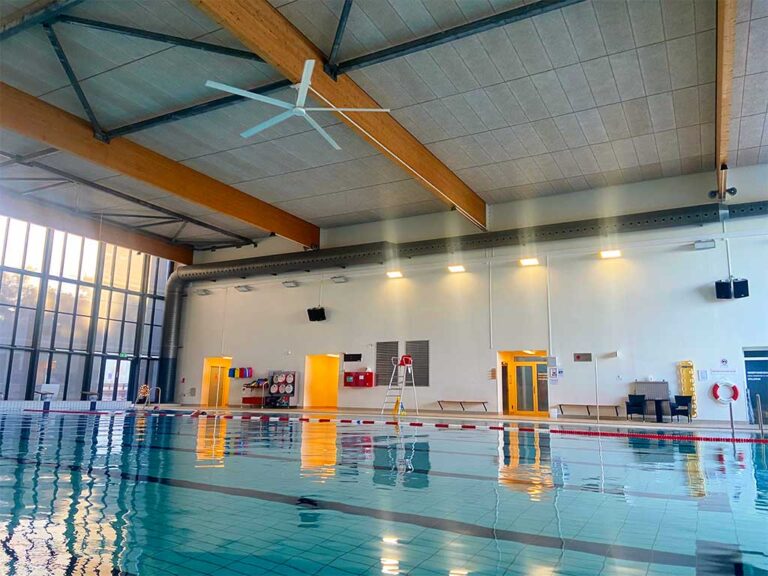
Grenaa Swimming Centre faced exactly these issues. Claus Nielsson, lifeguard and technical manager, highlighted that they wanted to eliminate the feeling of “sweat running down your back.”
Previously, lifeguards could only remain in the swimming hall for 2 to 4 hours at a time before experiencing discomfort, headaches and fatigue due to the heavy indoor climate.
According to Claus Nielsson, the difference after installation was noticeable:
“Previously, we were around 53–54% relative humidity. Now we are around 48%. That means we no longer experience the heavy and stagnant air in the swim hall.”
The improved air movement creates a more comfortable occupied zone – without causing draft, which is essential in an environment where guests are dressed in swimwear.
MORE UNIFORM DISTRIBUTION OF HUMIDITY AND TEMPERATURE
Stratification is common in swimming facilities:
- Warm and humid air accumulates beneath the ceiling
- The occupied zone is affected by stagnant air
- Ventilation efficiency is reduced
An HVLS fan creates controlled, slow and continuous air circulation that:
- Reduces temperature gradients between ceiling and floor
- Distributes humidity more evenly throughout the space
- Minimises local accumulation of chlorine-related by-products
- Supports the ventilation system’s removal of moisture and airborne compounds
The measured change in relative humidity can be attributed to improved air distribution and better interaction between air circulation and the existing ventilation system.