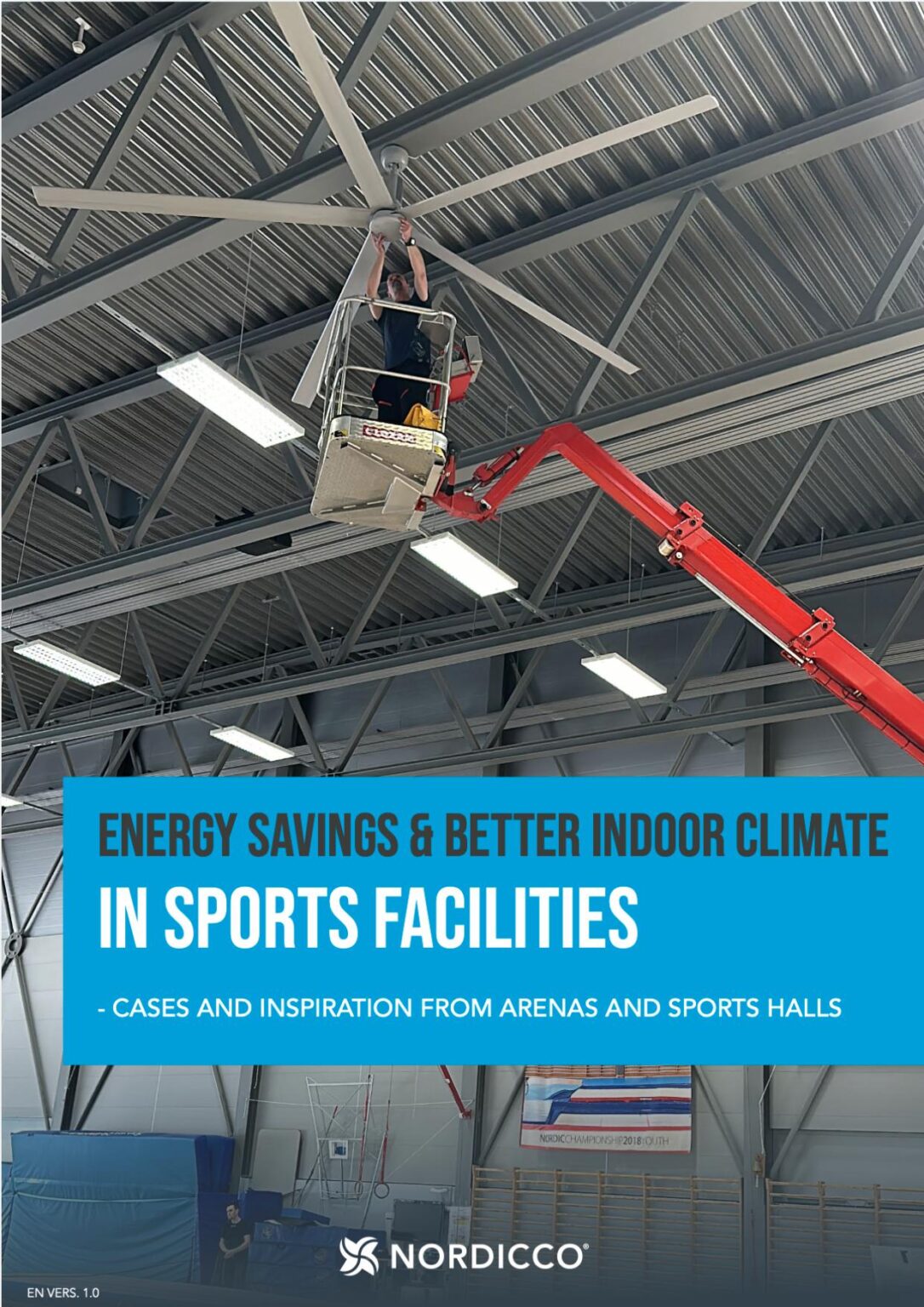
Holbaek Municipality is largely gas-heated, with approximately 85% of public buildings relying on gas (2022 data). Even before the European energy crisis, the municipality was actively reducing energy consumption across its facilities.
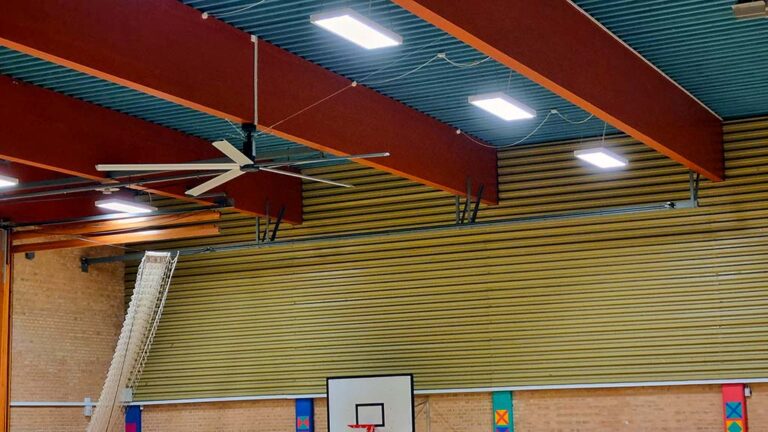
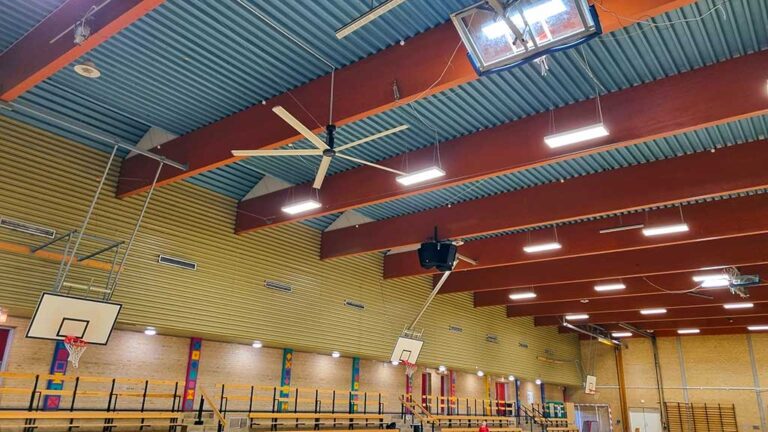
One of the initiatives was the installation of HVLS fans in several sports halls—an investment that led to substantial heating savings and improved indoor climate conditions.
This case outlines how Energy Technologist Christoffer Larsen has worked with energy optimisation and how HVLS fans became one of the tools enabling measurable reductions in both heating and electricity use.
At the end of the case, you will find additional tips on how your organisation can reduce heating consumption in large buildings.
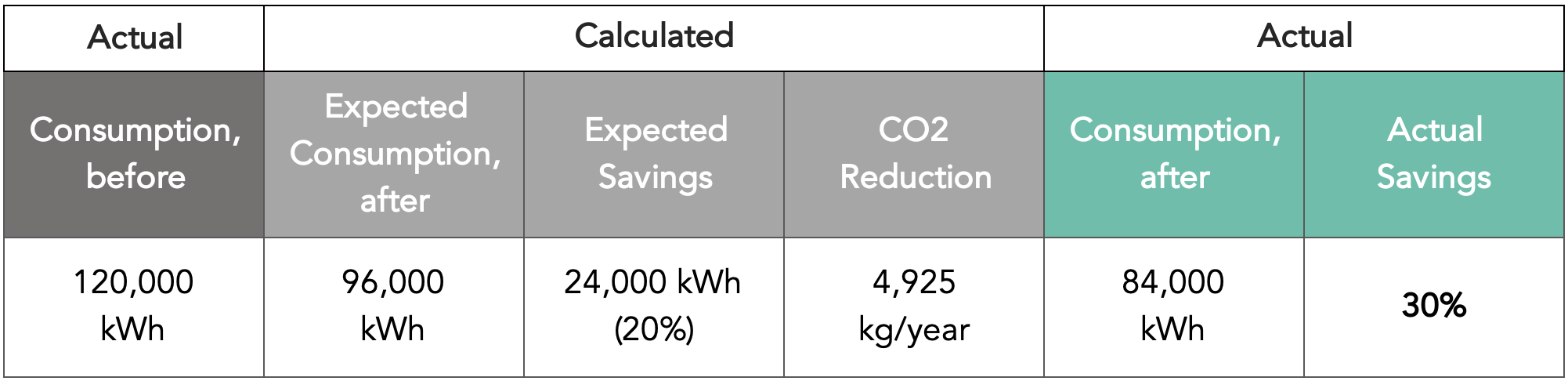
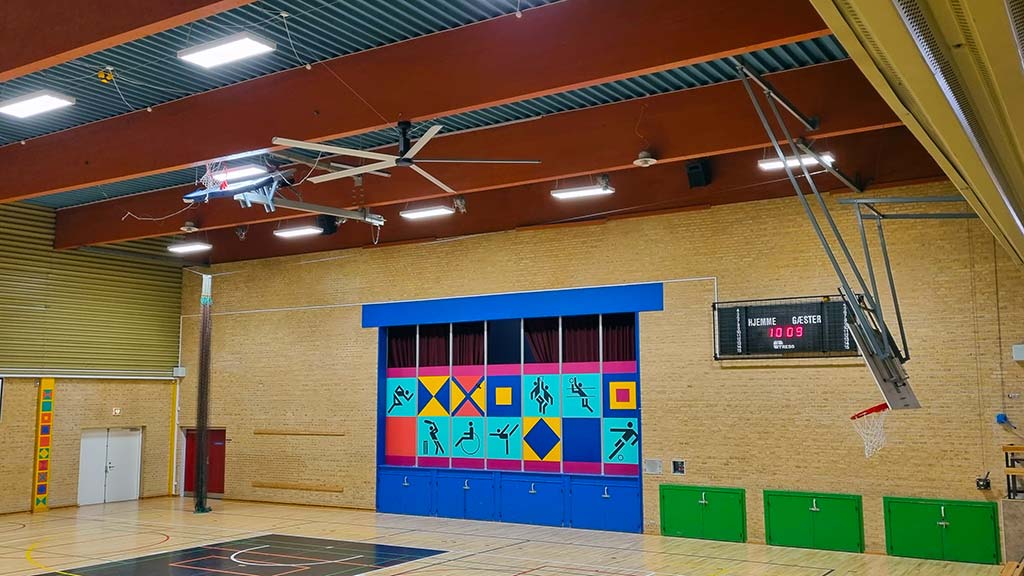
Before installing Northern Air® HVLS fans, Christoffer Larsen carried out an energy assessment in the gas-heated sports facility Undløse Hallen. The calculations suggested a 20% annual heating reduction.
Already in the first month of operation, savings exceeded expectations:
Heating consumption dropped by more than 20% compared to the same month the previous year.
When reviewing the full-year data, the municipality had achieved an impressive 30% reduction in heating consumption. This result exceeded initial estimates and confirmed the high impact of HVLS technology in large-volume spaces.
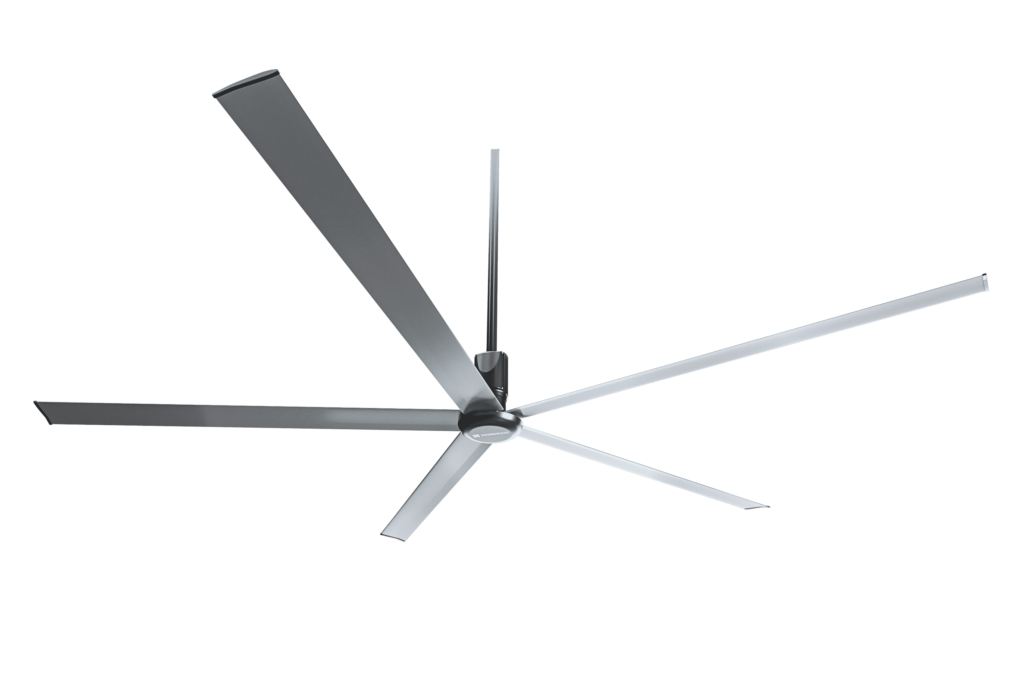
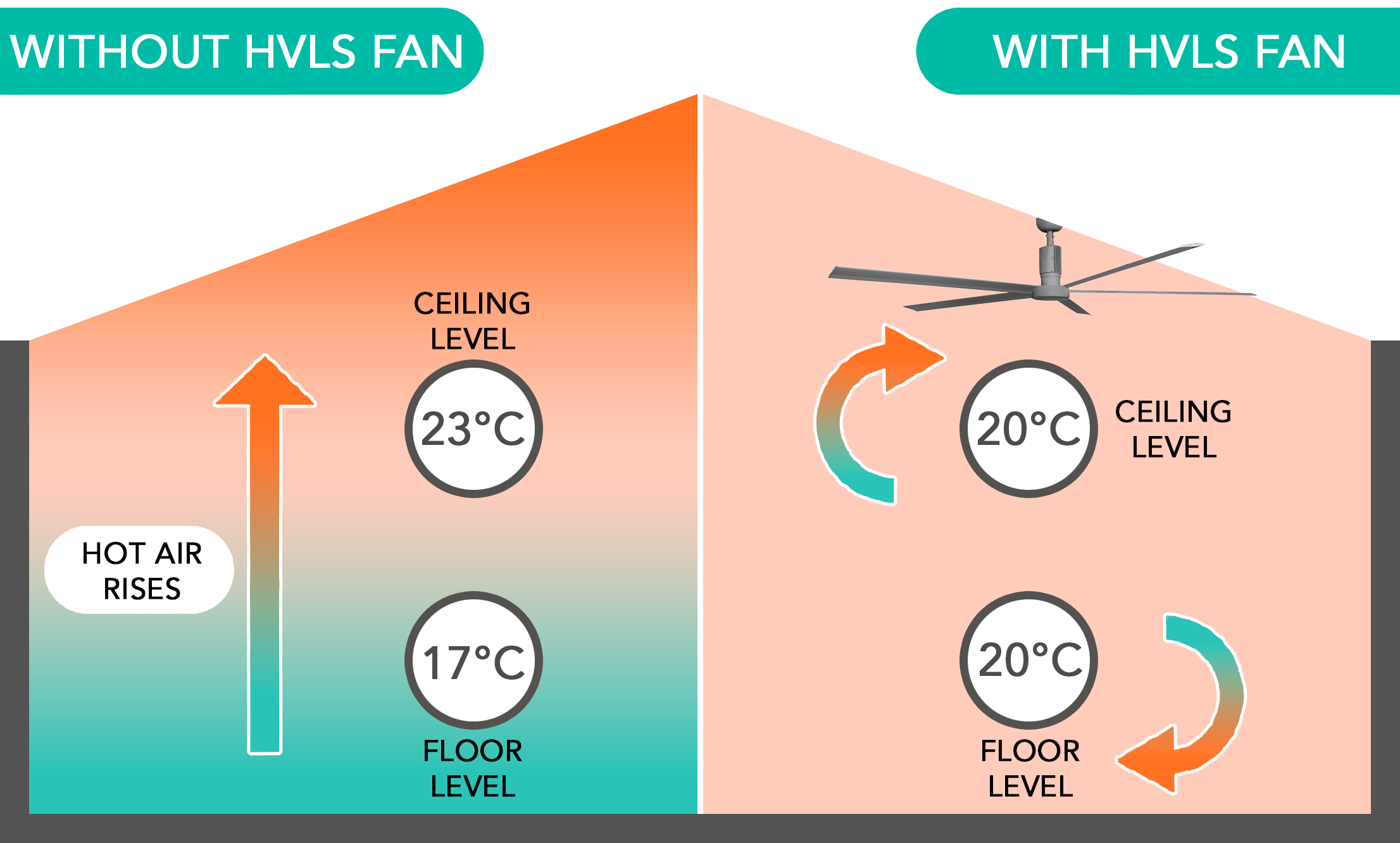
HVLS fans optimise temperature distribution by mixing the warm air trapped near the ceiling with cooler air at floor level. This process—known as stratification equalisation or temperature balancing—raises the temperature at floor level without adding extra heat.
This allows facility managers to lower the thermostat while maintaining thermal comfort, directly reducing gas consumption.
High occupancy and intense physical activity lead to rising CO₂ levels—especially in sports halls. Because CO₂ is heavier than air, the concentration increases in the occupied zone, creating heavy, stale air and discomfort for users.
HVLS fans ensure constant and gentle air circulation, equalising CO₂ concentrations throughout the hall. The result is:
This benefit was observed in multiple sports facilities in Holbaek Municipality.
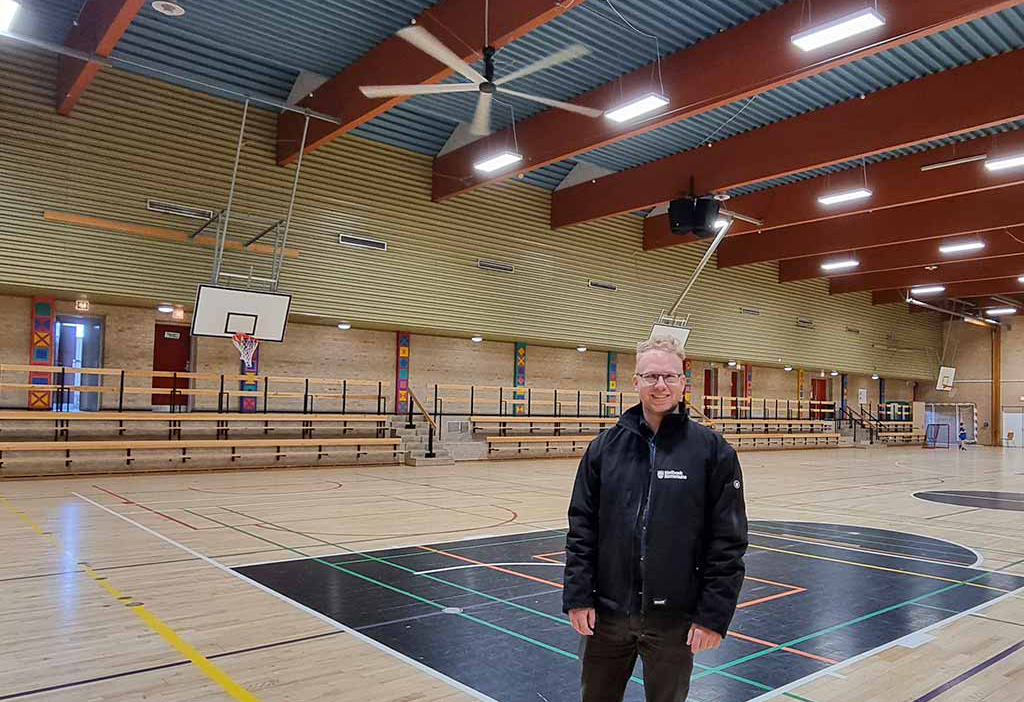
“In Undløse Hallen, we experienced a major energy saving of over 20% during the first month.
By improving air stratification, we were able to reduce gas consumption because the warm air was pushed down into the occupied zone instead of staying near the ceiling.
We’ve achieved a very substantial energy saving.”

Sources: ASEW / Stadtwerke Norderstedt ‘Tips on energy saving’ (2022) IEA (International Energy Agency) and Bolius.dk
Before installing HVLS fans in the Undlose Sports Hall, Nordicco prepared an overview of the expected energy savings based on a calculation model developed by energy advisors from EWII. Key influencing factors included:
For Undlose Sports Hall:
Actual results significantly surpassed these projections.
Initially, Christoffer Larsen was sceptical about whether a fan could generate meaningful energy savings.
However, after reviewing installations in other municipalities and understanding the technical principles, Christoffer moved from healthy skepticism to a well-considered decision to invest.
HVLS fans have a very low power consumption (~30 watts) and therefore operate at minimal cost.
Yet the potential for heating savings during the winter months is substantial.
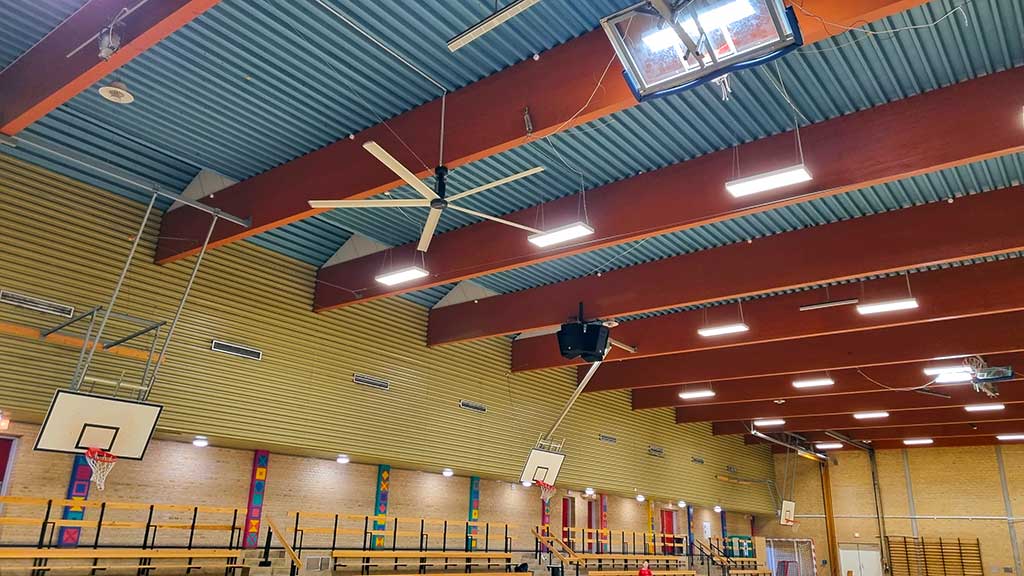
Christoffer Larsen highlights that the investment in HVLS fans was small compared with alternatives such as full roof insulation.
“What caught my interest was the significant energy savings that could be achieved for a relatively small investment.
Instead of having to insulate the entire roof, we could make a simple and straightforward investment with an uncomplicated setup.” says Christoffer Larsen.
Beyond heating reductions, the constant air mixing reduces stagnant, heavy air and increases comfort.
Holbaek Municipality has so far installed HVLS fans in eight sports facilities (2022 data).
In addition to Undløse Hallen, two Northern Air® HVLS fans were installed in Bjergmarkshallen, a standard 800 m² sports hall used by schools and sports clubs.
After installation, the technical service department optimised hall operations, leading to financial savings – without compromising the indoor climate.
Temperature differences before installing a fan in a sports hall would typically range from 17°C at floor level to 23°C near the ceiling. After installation, the fan can help achieve a more consistent temperature of typically around 20°C throughout a space.
All in all, the fans push the warm air downward, benefiting not only the people using the hall – both visitors and staff – but also the municipality as a whole through economic savings.

Explore how ceiling fans have created value for organisations and businesses in Northern and Central Europe. Find customer cases showing significant energy savings, reduced CO2 emissions, and improved indoor climate.
By saving on heating, you automatically save money on your energy bill. It’s in everyone’s interest that we each do our part to reduce overall energy consumption. This applies to businesses, public institutions, and private households alike. Below, we have complied a series of tips for for organisations that want to reduce energy use in large buildings:
LOWER ROOM TEMPERATURE BY 1°C
Lowering the temperature by one degree typically saves around 5-6% on heating consumption.
Source: Source: ASEW / Stadtwerke Norderstedt ‘Tips on energy saving’ (2022) IEA (International Energy Agency)
IMPROVE BUILDING INSULATION
A well-insulated building envelope—walls, roof, windows, and ground-contact floors—reduces heat loss and cuts long-term operating costs.
USE NIGHT- AND WEEKEND SETBACKS
In some cases, lowering the temperature outside occupancy hours (e.g., down to 16-18°C) can save on energy costs.
Source: ASEW / Stadtwerke Norderstedt ‘Tips on energy saving’ (2022)
INSTALL HVLS FANS
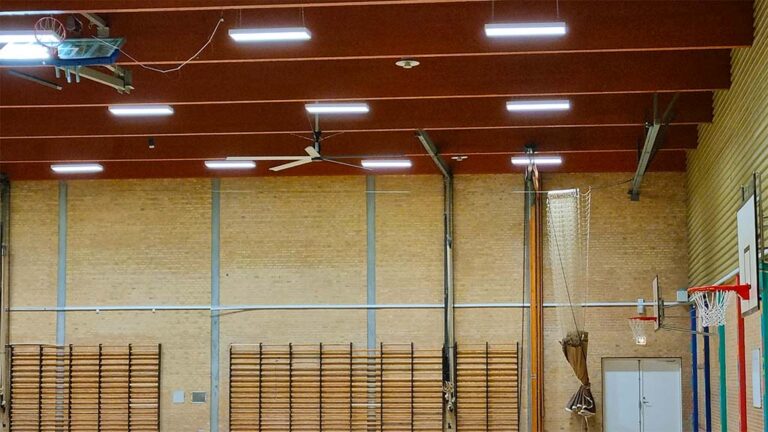
In large buildings with high ceilings, warm air gathers at the top. HVLS fans push this heat back down to the occupied zone, typically reducing heating consumption by ~25% during the heating season.
USE AUTOMATION
Do your computers, screens, and coffee machines have a built-in sleep mode?
By limiting the number of hours these devices are in use, you can save on electricity consumption.
If the devices don’t have a built-in function, timers can be used to automatically turn off printers, computers, and other equipment when they are not in use.
Source: Danish Energy Agency
CHECK YOUR LIGHT SOURCES
Lighting has a significant impact on electricity consumption. Modern LED bulbs are far more energy-efficient than older technologies such as compact fluorescent lamps (CFL) or halogen bulbs.
According to the European Commission’s ecodesign and energy-labelling data, LED light sources typically last 15,000–20,000 hours, compared with around 6,000–10,000 hours for CFLs and only around 2,000 hours for halogen bulbs. This means LEDs often last several times longer in real-world use.
LEDs also consume significantly less electricity—studies from the European lighting industry show energy savings of 50–70% compared with traditional light bulbs.
By switching to LED lighting, large buildings can reduce both energy consumption and long-term operating costs.
Source: Guide to Energy-Efficient Lighting (European Commission)
OPTIMIZE VENTILATION SCHEDULES
How is your ventilation system operated? In many large buildings, ventilation alone can account for a substantial portion of total energy consumption – in some cases representing up to 30% of heat loss.
When spaces are unoccupied (nighttimes, weekends, holidays), reducing ventilation rates or switching the system off can yield significant savings. Moderate over-cooling also carries a heavy energy cost.
According to the European Environment Agency, reducing cooling demand through better control and scheduling is one of the most effective techniques to cut electricity use in large buildings.
By managing your cooling system more intelligently—avoiding excessive set-points and limiting use to occupied hours – you reduce unnecessary power consumption and lower operating costs.
Sources: CIBSE – The Chartered Institution of Building Services Engineers and European Environment Agency
You’ll find an email with a link to the case collection.
Enjoy the read!
You’ll find an email with a link to the case collection.
Enjoy the read!