55,000 kWh Energy Savings in a Swimming Pool after Operational Optimization

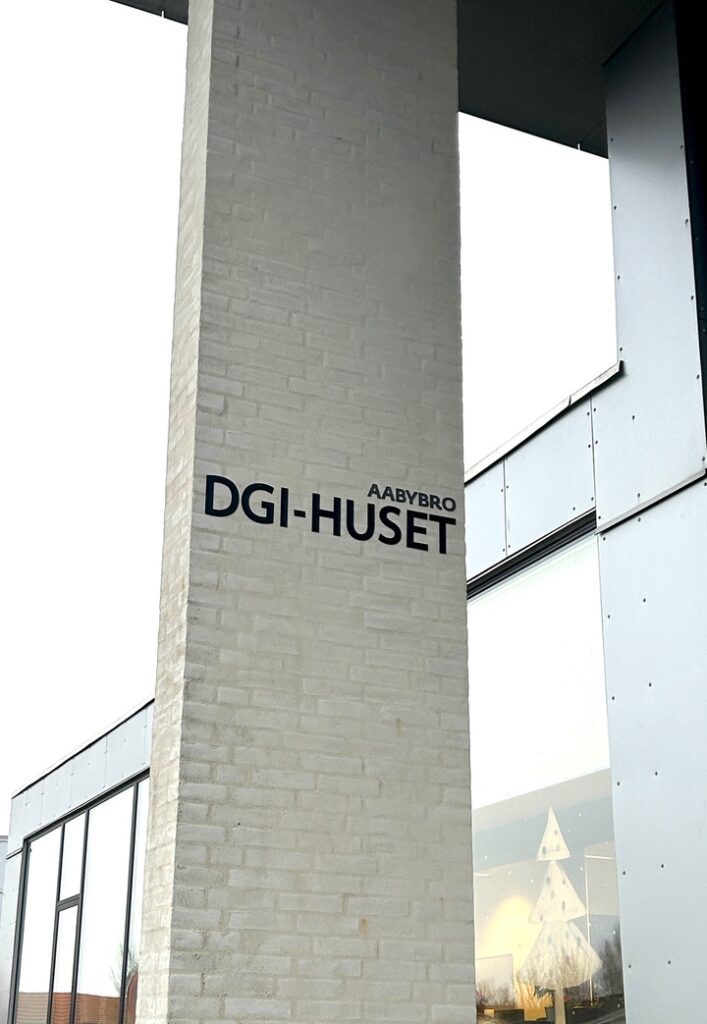
Case from DGI Aabybro

The Case – In Brief

Following the installation of two HVLS fans in the swimming pool and the replacement of key components in the ventilation system, DGI Huset Aabybro reduced its total electricity consumption from approximately 300,000 kWh to around 250,000 kWh annually – resulting in a documented saving of 55,000 kWh.

However, the savings did not come automatically. They were achieved through active system adjustment, data-driven insights, and continuous optimization of the ventilation system.

Town Hub – From Cradle to Grave

DGI Huset Aabybro is much more than a swimming pool. With around 6,500 residents in the town and nearly 30% of the municipality’s schoolchildren based in Aabybro, the facility plays a central role in the local community.

“It’s a town hub. From cradle to grave,” says Anders Christiansen with a smile. “We offer activities for all ages throughout life.”

The facility generates an annual revenue of just under DKK 11 million and receives operational support from the municipality. Efficient operations are therefore not just desirable – they are essential.

Unlocking Energy Saving Potential

When Anders Christiansen took on the role of Director at DGI Huset Aabybro in September 2022, energy optimization was a natural priority.

With a background in energy and IT, and a strong interest in data, he knew there was untapped potential in the swimming pool.

Anders actively sought input from suppliers and other professionals with experience in swimming pool operations to identify the most impactful energy-saving initiatives.

As part of this process, he was introduced to HVLS technology through colleagues in Jammerbugt Municipality.

No Effect… At First

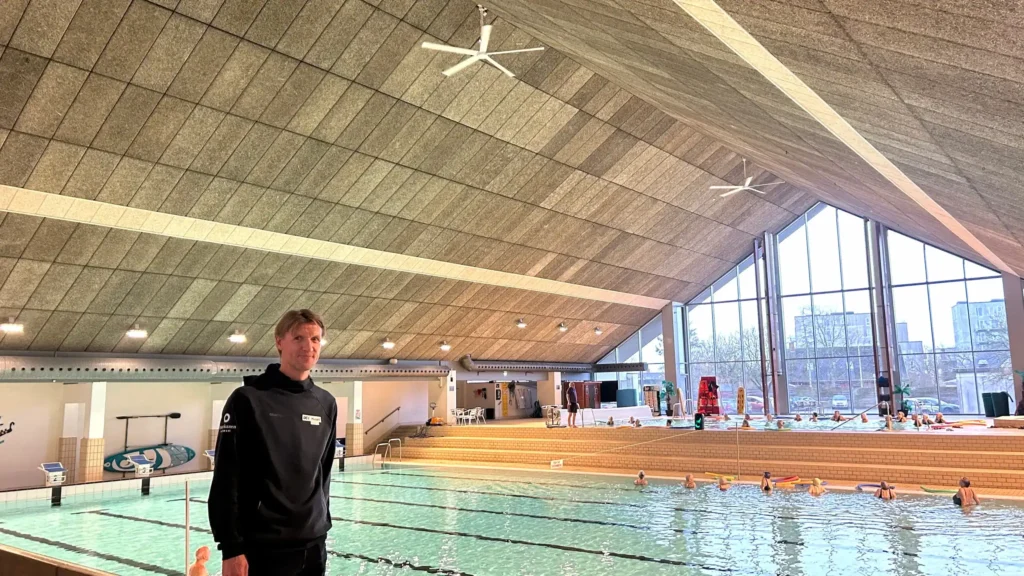
As part of his optimization efforts, Anders chose to install two Nordicco HVLS fans in the swimming pool. Specifically the Northern Air® Aqua model, designed for aquatic environments.

The ceiling fans were installed during the winter of 2023/2024.

And then… nothing happened.

“I couldn’t really see any difference at first,” Anders explains candidly.

But there was one thing he hadn’t done yet: adjust the ventilation system settings.

On February 28, 2024, Anders reduced the air change rate by adjusting the frequency converter on the ventilation system.

“The month after, I could suddenly see the difference.”

By combining the air circulation from the HVLS fans with a reduced ventilation rate, energy consumption was significantly lowered – without compromising humidity control.

“It works quite well,” Anders says with a smile, in typical understated North Jutland fashion.

The total electricity consumption at DGI Huset Aabybro was reduced from approximately 300,000 kWh to around 250,000 kWh within a year. More specifically, this corresponds to a saving of 55,000 kWh. Something Anders is convinced is primarily the result of operational optimization in the swimming pool.

“You’d have to sell a lot of fries or swimming tickets to achieve savings equivalent to 55,000 kWh on the bottom line,” he says with an enthusiastic smile.

“So this really makes a difference.”

The fans are also used actively in daily operations. During pool party events, where smoke machines are sometimes used, Anders switches the fans to forward mode to push the air down towards the pool.

“That way, we keep the smoke close to the water.”

In everyday operation, however, the fans primarily run in reverse mode, creating a more indirect airflow and optimal destratification throughout the swimming pool.

INFO BOX - DGI HUSET AABYBRO

Director:
Anders Christiansen (appointed September 2022)

Building:
Approx. 5,200 m² + 1.900 m² basement

Annual Visitors:
Estimated between 500,000 and 800,000 guests

Project Installation:
2 x Northern Air® Aqua HVLS fans from Nordicco

Documented energy savings:
Approx. 55,000 kWh
Data as an Operational Tool

Anders describes himself as a data enthusiast. He actively uses the Northern Sky® platform to monitor:

Relative humidity, temperature, and overall operational stability and fluctuations.

“I keep an eye on everything. It’s very easy to follow in Sky.”

One day, he suddenly noticed a sharp increase in relative humidity.

“I could feel it in the hall. So I went into the system and saw that the humidity had spiked.”

It turned out that part of the ventilation system had not been properly restored after a frost protection test.

“I took a screenshot from Northern Sky® and sent it to my ventilation technician. That way, he could immediately see what was wrong.”

Further Optimization

Rather than replacing the entire ventilation system, Anders chose to upgrade key components such as motors, sensors, and other critical parts to ensure optimal performance.

In the spring of 2025, he took the next step: the ventilation system was adjusted to automatically regulate based on humidity levels and load.

“The curves have become much more stable. There are far fewer fluctuations now.”

He expects an additional optimization of around 10% as a result of these adjustments:

“The swimming pool is now as close to being as operationally efficient as it can get.”

HVLS alone is not enough

The case from DGI Aabybro highlights one key point: HVLS fans create the conditions for energy savings – but the actual savings are typically only realized once the system is properly adjusted and optimized.

“There aren’t many systems that automatically fine-tune themselves perfectly,” Anders explains.

Without active adjustment and optimization, the 55,000 kWh savings achieved in Aabybro would not have been realized.

Conclusion

The story from DGI Huset Aabybro demonstrates that energy savings in swimming pools rarely come from a single installation alone. They are created through the interplay between technology, data, and active operational management.

The HVLS fans established the foundation for improved air circulation and a reduced need for ventilation. However, the real savings only materialized once the system was actively adjusted and optimized.

For Anders Christiansen, the installation was not the end of a project – but the beginning of an ongoing optimization process. Through continuous adjustments, data-driven monitoring, and a curious, hands-on approach to operations, the swimming pool has significantly reduced its energy consumption while achieving a more stable indoor climate.

Today, thanks to Anders’ energy initiatives, the swimming pool in Aabybro has reached a level where operations and energy use are aligned as efficiently as practically possible.

Would you like to learn more about how to reduce energy consumption in your swimming pool?

Se hvordan flere kommuner har sparet 30% på varmeforbruget
Nordicco Case Collection - cover