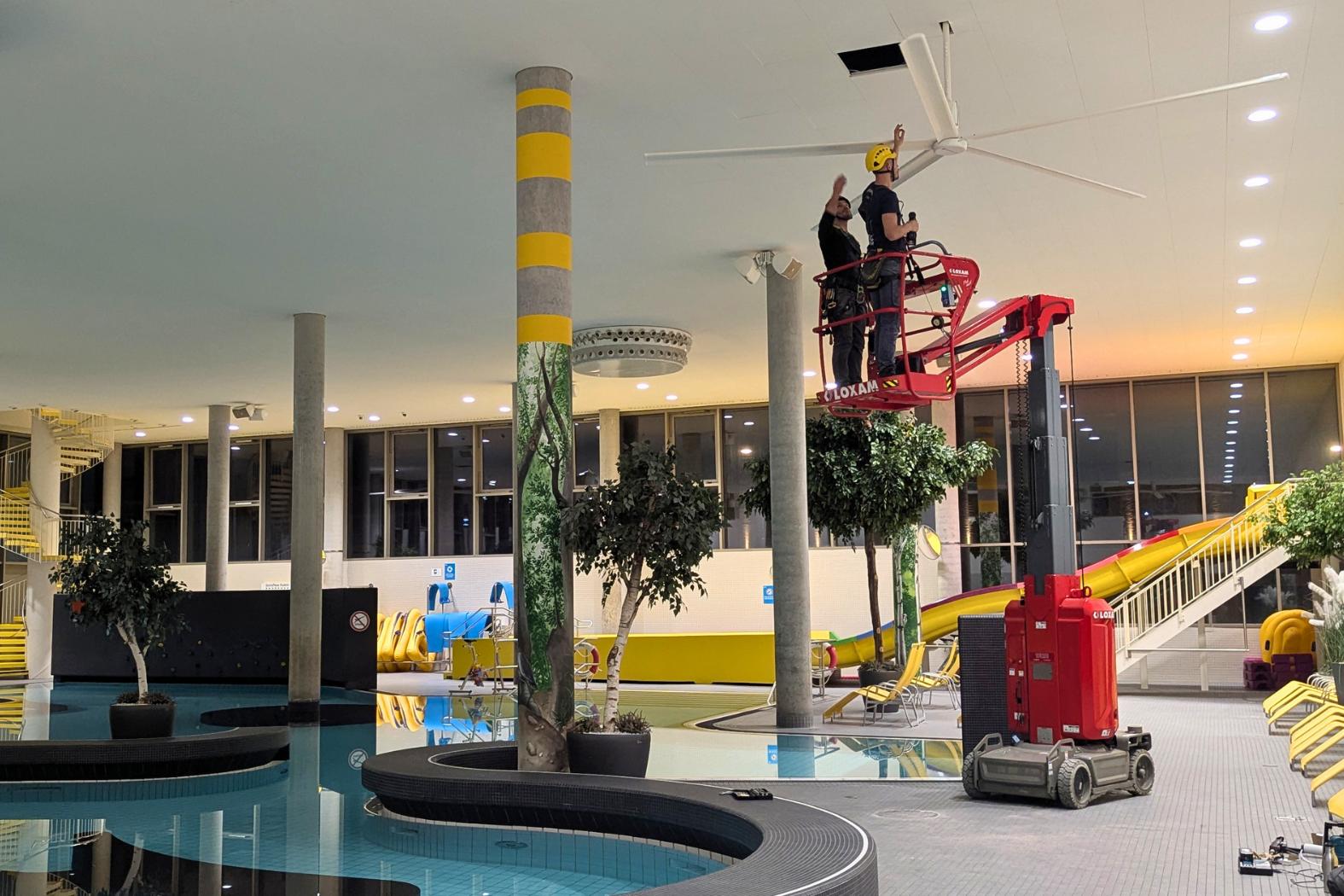
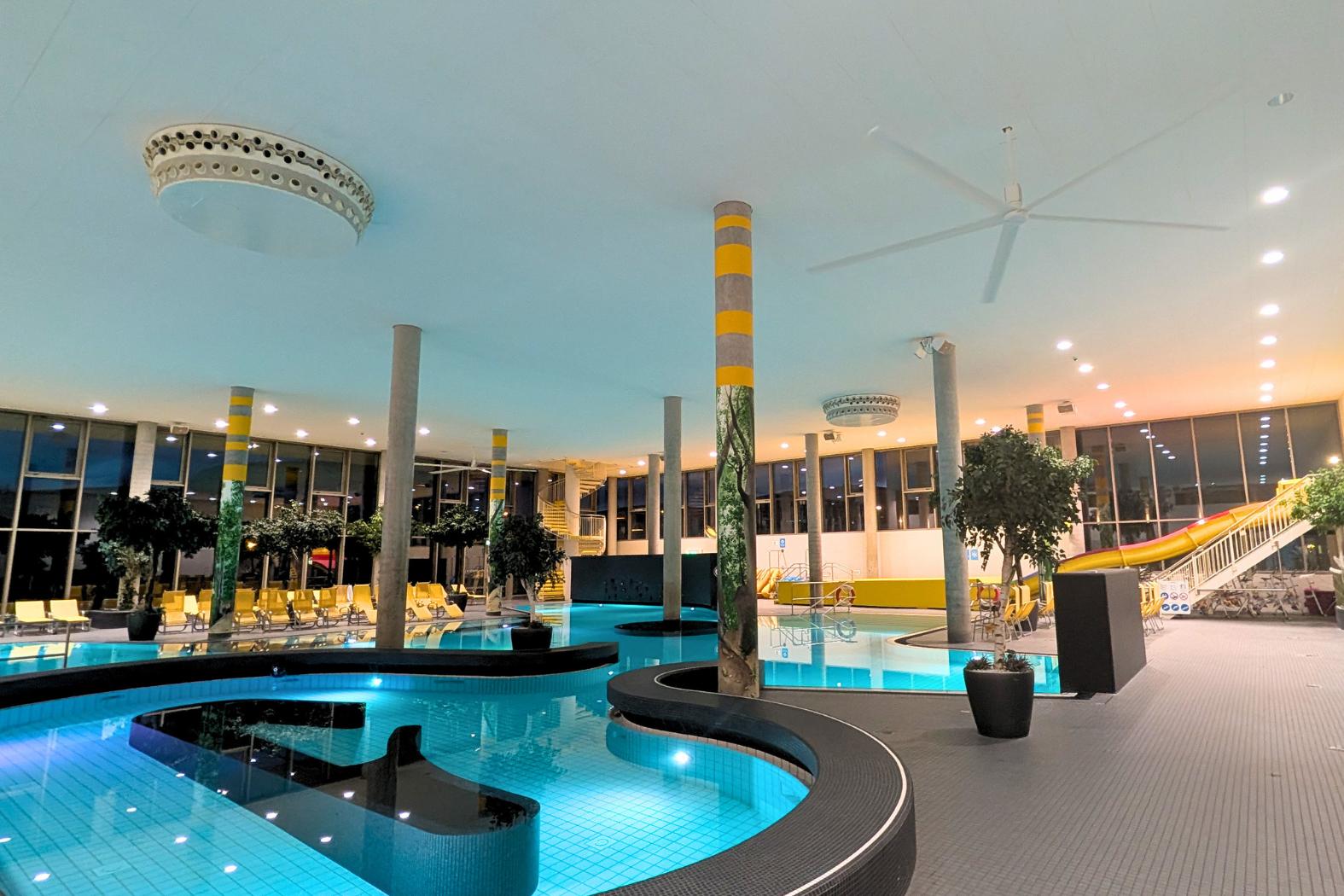
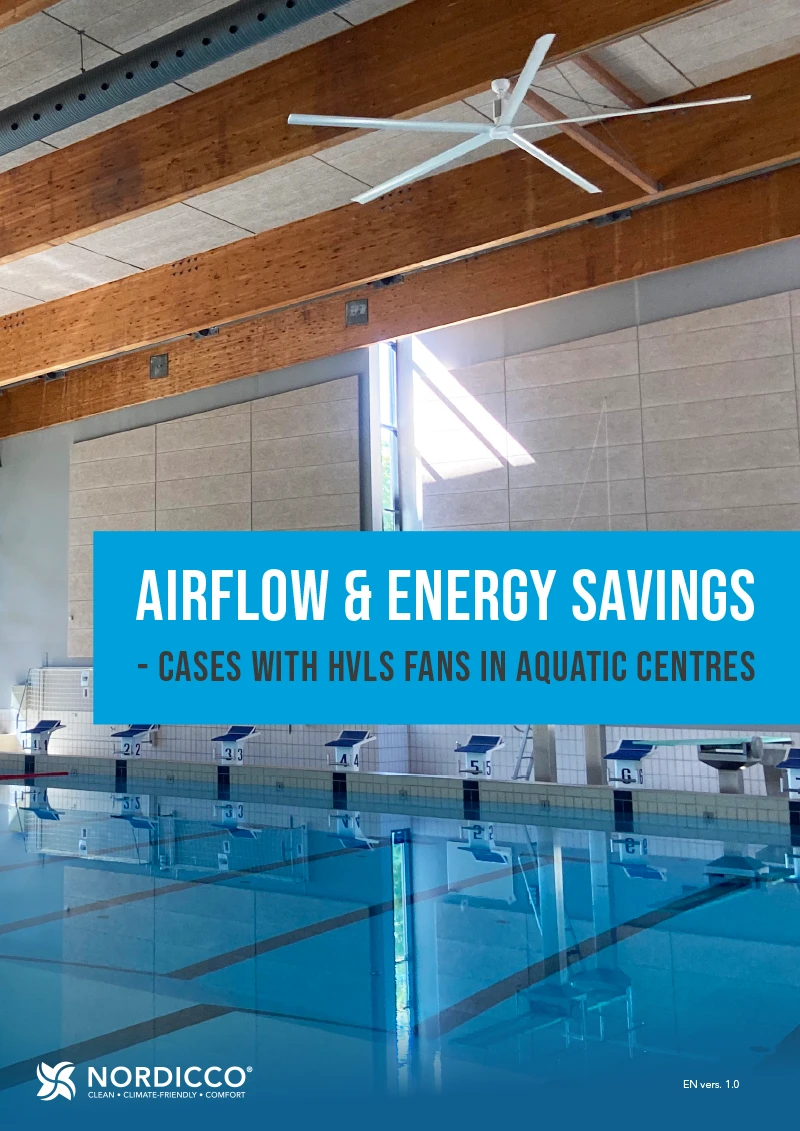
At blu Aquatic Center in Potsdam, near Berlin, two Nordicco Northern Air® Aqua HVLS fans were introduced as part of an optimisation of the pool hall’s ventilation system.
The objective was to create more effective air circulation inside the building, allowing the airflow from the existing air handling units to be significantly reduced while maintaining a good indoor climate.
Measurements carried out between 29 April and 10 June 2026 showed a 29.15% reduction in electrical energy use, including the electricity consumed by the HVLS fans themselves.
The reduction corresponds to 130 kWh per day and an annualised saving of 47.6 MWh. At the same time, total ventilation airflow was reduced by 47.8% – from 53,600 to 28,000 m³/h.
Before the optimisation, air circulation in the pool hall depended on the airflow supplied by the ventilation system, including long-throw air jets.
The purpose of introducing HVLS fans was to create the required circulation more efficiently inside the room. This made it possible to gradually reduce the volume of air moved by the two air handling units while monitoring the effect on indoor conditions.
The airflow was reduced step by step from a combined 53,600 m³/h to 28,000 m³/h. The final operating settings were 16,000 m³/h for one air handling unit and 12,000 m³/h for the other.
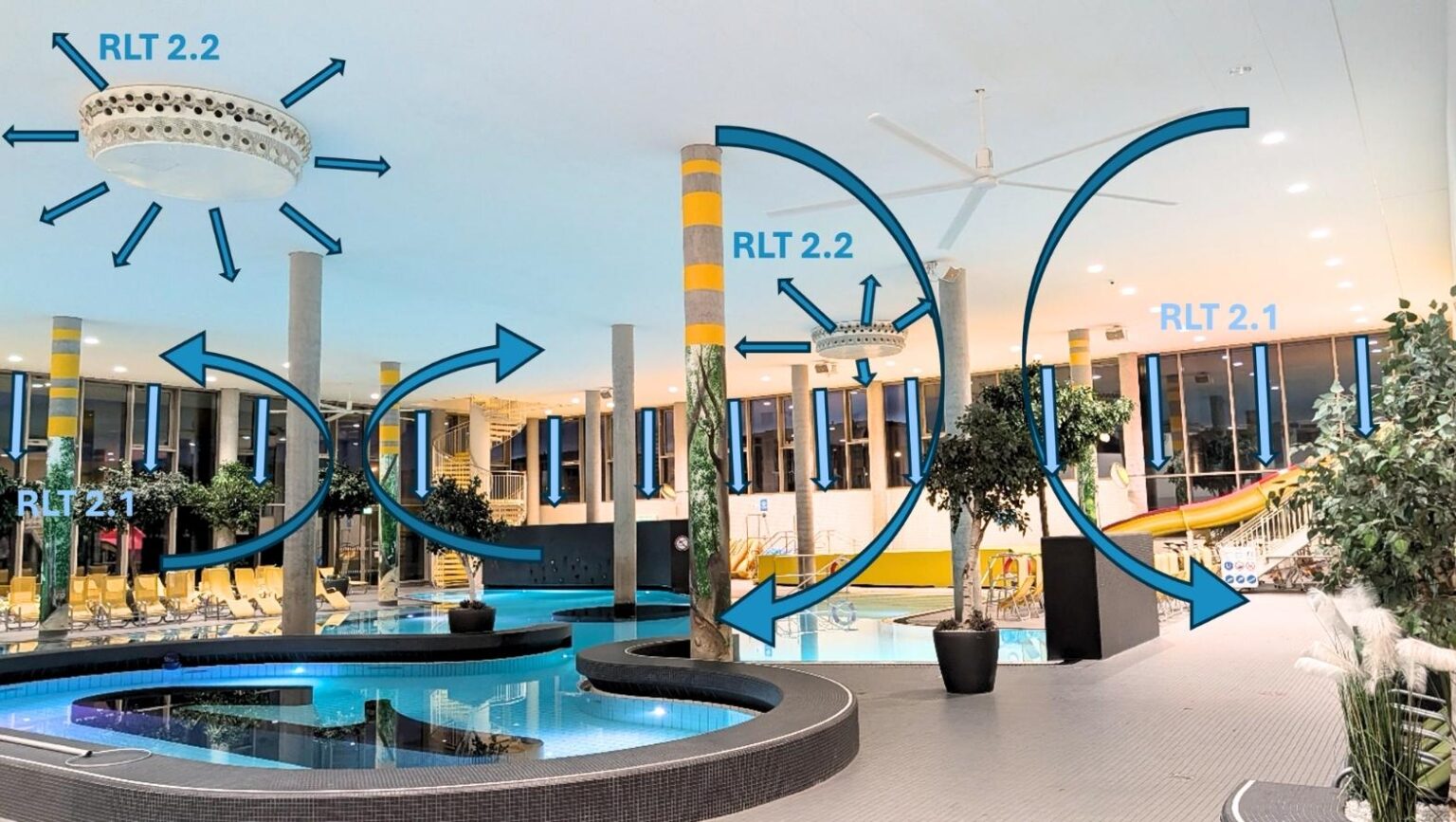
Two Northern Air® Aqua HVLS fans were used in different parts of the pool hall.
One fan positioned near the waterslide was configured to move air upwards, across the ceiling and towards the windows before circulating it back down. The second fan near the entrance moved air downwards along the wall and windows and across the water.
The operating settings were established on site to provide the required circulation without creating an uncomfortable airflow for guests. At the operating speeds documented during the analysis, the two fans consumed approximately 55 W and 17 W respectively – only 72 W combined.
To quantify the effect of the optimisation, the system was tested under different operating conditions.
After the final reduced airflow settings had been established, the air handling units were temporarily returned to their original airflow levels. The HVLS fans were also switched off during part of the test before the optimised configuration was restored.
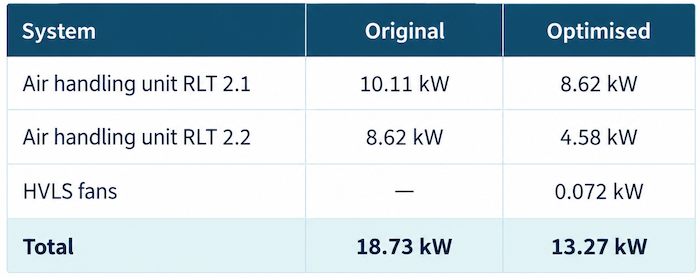
This made it possible to compare electrical power consumption between the original and optimised operation. The result: 29.15% lower electrical energy use (See table).
Based on the measured operating conditions, this corresponds to approximately 130 kWh less electricity per day and an annualised electricity saving of 47.6 MWh. The electricity consumption of the HVLS fans is included in these figures.
Actual savings varied with weather conditions during the measurement period.
Weekly reductions ranged from approximately 25% to 38%, with 29.15% representing the calculated overall reduction reported in the analysis.
Reducing ventilation airflow in an aquatic centre cannot be evaluated on energy consumption alone.
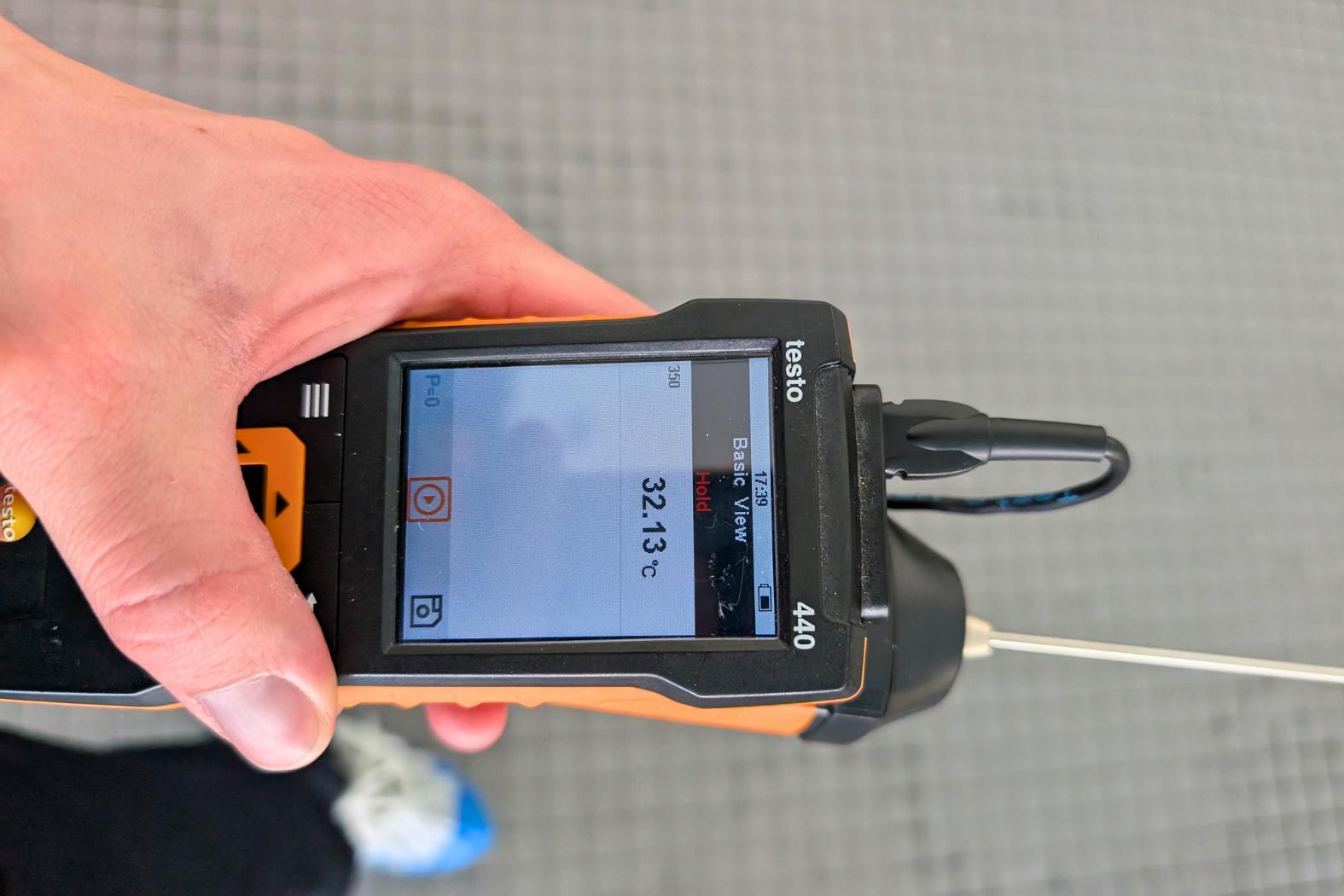
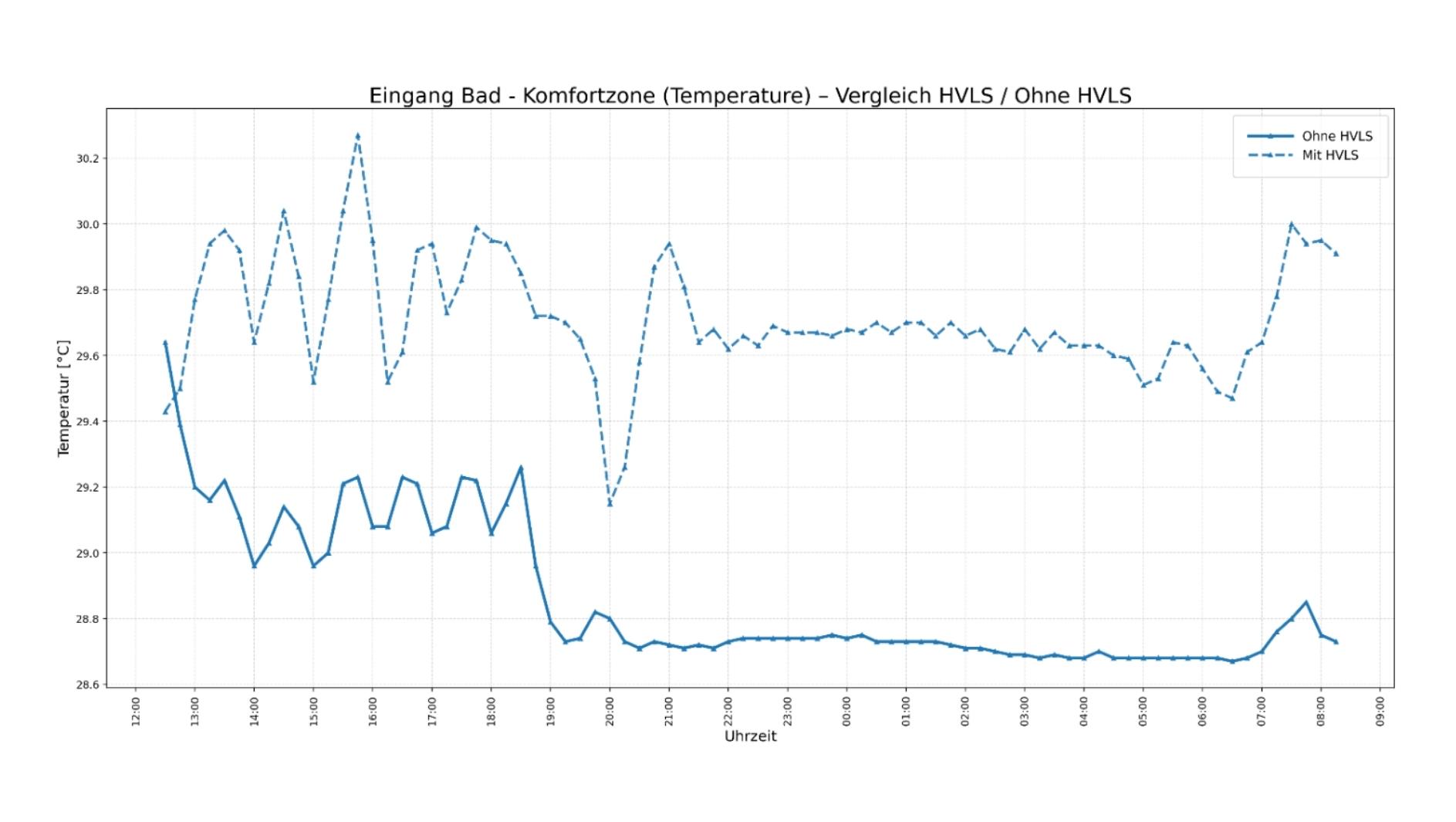
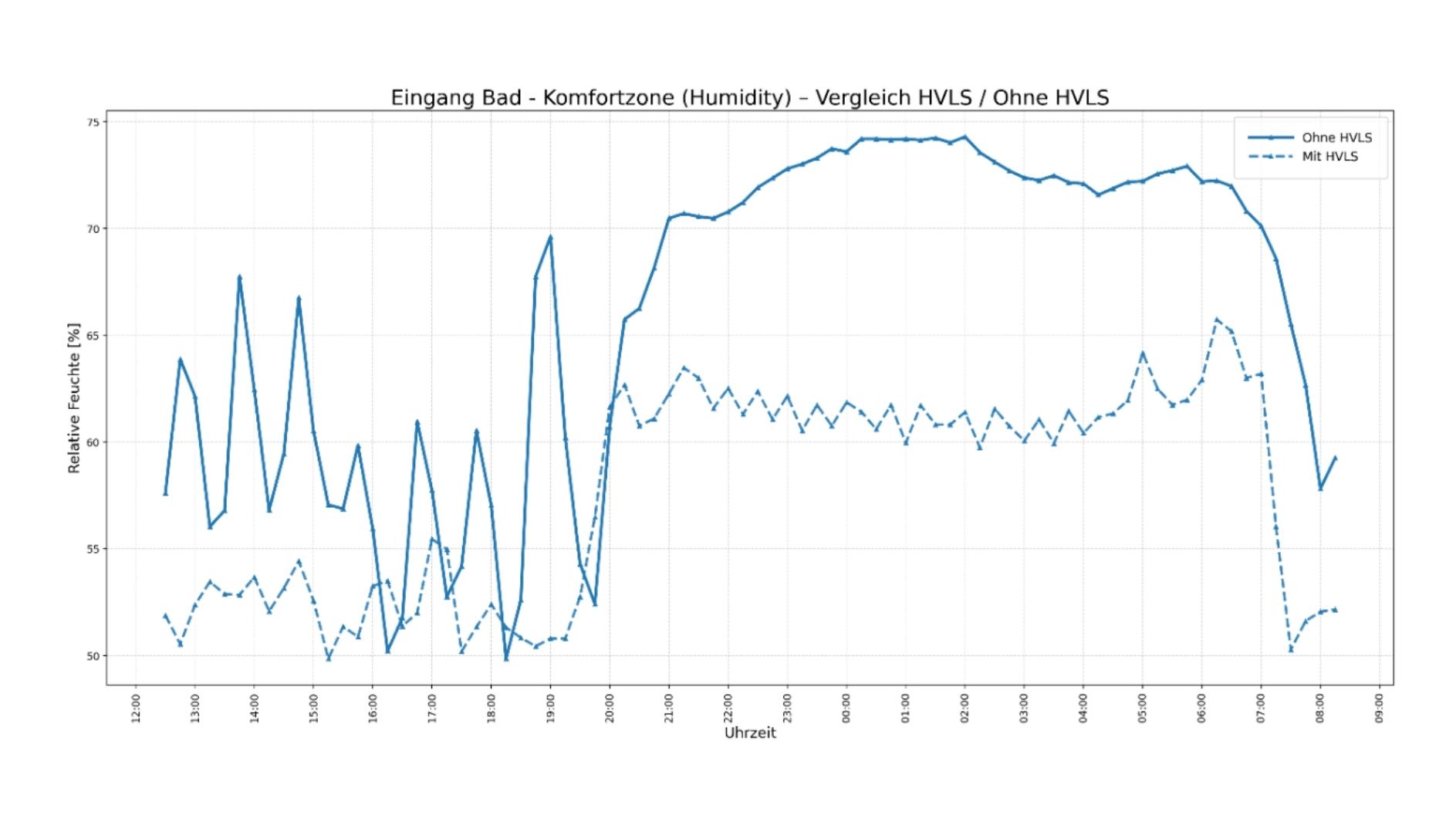
Temperature, humidity and air quality also need to be considered. Nordicco Northern Sky sensors were therefore used to compare temperature, humidity and CO₂ measurements with the HVLS fans operating and with the fans switched off.
The compared periods had similar visitor numbers.
The higher temperatures measured in the occupied zone and above the water were also associated in the technical report with reduced evaporation and therefore a lower requirement for dehumidification.
The measurements were not the only indication that air distribution had changed.
During the energy analysis, the HVLS fans were temporarily switched off. According to the technical report, staff then complained about the deterioration in the indoor climate – even while the ventilation system was operating at its original, higher airflow settings.
The observation supports the measured findings that the HVLS fans were not simply allowing ventilation airflow to be reduced; they were also contributing to more effective distribution of the conditioned air inside the pool hall.
The project at blu Aquatic Center demonstrates an important principle in the operation of large indoor spaces: moving more ventilation air is not necessarily the same as distributing that air effectively.
By using two HVLS fans to create controlled circulation within the pool hall, blu Aquatic Center was able to operate its air handling units at substantially lower airflow while maintaining – and in several measured respects improving – the indoor climate.
The result was a 47.8% reduction in ventilation airflow and a measured 29.15% reduction in electrical energy use, including the power consumed by the HVLS fans themselves.
Large HVLS ceiling fan specifically designed for aquatic centres. Helps optimise airflow and HVAC operation, supporting energy savings of up to 39%.
Explore real-world projects showing how Nordicco solutions help reduce energy use, optimise ventilation and improve indoor climate in swimming facilities, sports centres and other large buildings.
You’ll find an email with a link to the case collection.
Enjoy the read!
You’ll find an email with a link to the case collection.
Enjoy the read!